

Windrush Elders
Elsa Dormer
In 1962, a young woman from Barbados made the bold decision to leave her home in search of new opportunities. She was nearly 20 years old when she set foot in England, a place that seemed worlds apart from the sun-soaked island where she had grown up. Her journey was not just geographical but also one of personal transformation, shaped by the contrasts between her Caribbean upbringing and her new life in Britain.
Growing up in Barbados, she lived in a society that was transitioning towards independence. Barbados had not yet gained full sovereignty when she was a child, but it was a time of change and development. She recalls a childhood that was filled with simple joys – playing hopscotch with friends, visiting the beach under the watchful eye of an adult, and being part of a close-knit community. Her education took place in Catholic schools, where she experienced the formative years of her youth. Yet, even in her small island life, there were clear divides between the races. Wealth and business were often in the hands of the white community, and the subtle undercurrent of racial inequality was something she and others felt.
In 1962, with the option of training in either nursing or teaching, she was recruited to come to England to work as a nurse. The choice was made for her, as the demand for nurses from the Caribbean was high, and she found herself on a plane, bound for a foreign land. She had never expected to leave Barbados, but the prospect of a job and the promise of a better future led her to take a chance.
Arriving in England, she was struck by the differences in both environment and culture. The cold climate was a stark contrast to the warmth she had left behind. She recalls being awestruck by the houses, with their chimneys and quaint designs, and the sudden realisation of how different life in Britain was. Though she was accompanied by a fellow Caribbean migrant, the isolation was palpable at times. Despite the challenges, she quickly adapted, finding solace in her work at the hospital and in the friendship of those who shared similar experiences.
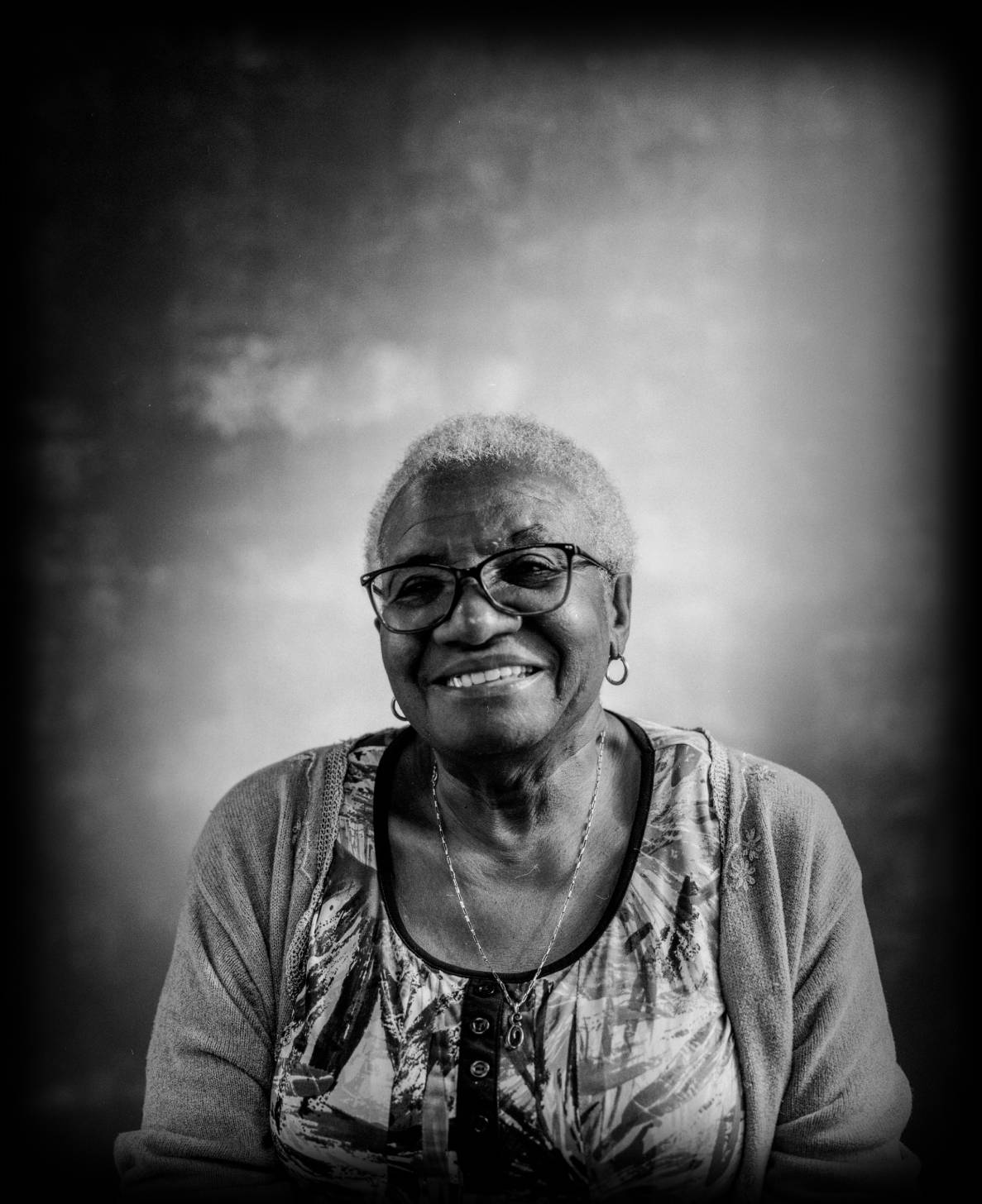
Life in the UK was not without its hardships, particularly in the face of the occasional racial prejudice. She remembers a moment when she went to a hospital for work, and a door was slammed in her face as soon as the staff realised she was black. However, she didn’t let such incidents define her experience. Instead, she focused on building her career and making a life for herself in this new land.
Financially, things were modest. She describes how much cheaper life was in Britain compared to Barbados, but also recalls the struggles of making ends meet, particularly in the early years. Despite this, there was an underlying sense of excitement and hope. With a sense of purpose, she worked hard, and after a time, managed to make a living and build a stable life.
As she settled in, she also formed deeper connections with her Caribbean roots. She regularly visited other Caribbean islands, including Union Island and Jamaica, forming bonds with people who shared her heritage. These trips provided a sense of belonging and a reminder of where she came from.
Today, looking back at her journey, she sees it as one of growth. She is a proud woman who faced the challenges of migration, the obstacles of racism, and the difficulties of starting anew in a foreign land. Her resilience and commitment to forging a new life are testaments to her strength. Though the world around her has changed in many ways, she remains rooted in her values, always embracing the beauty of both her Caribbean heritage and her adopted British home.